
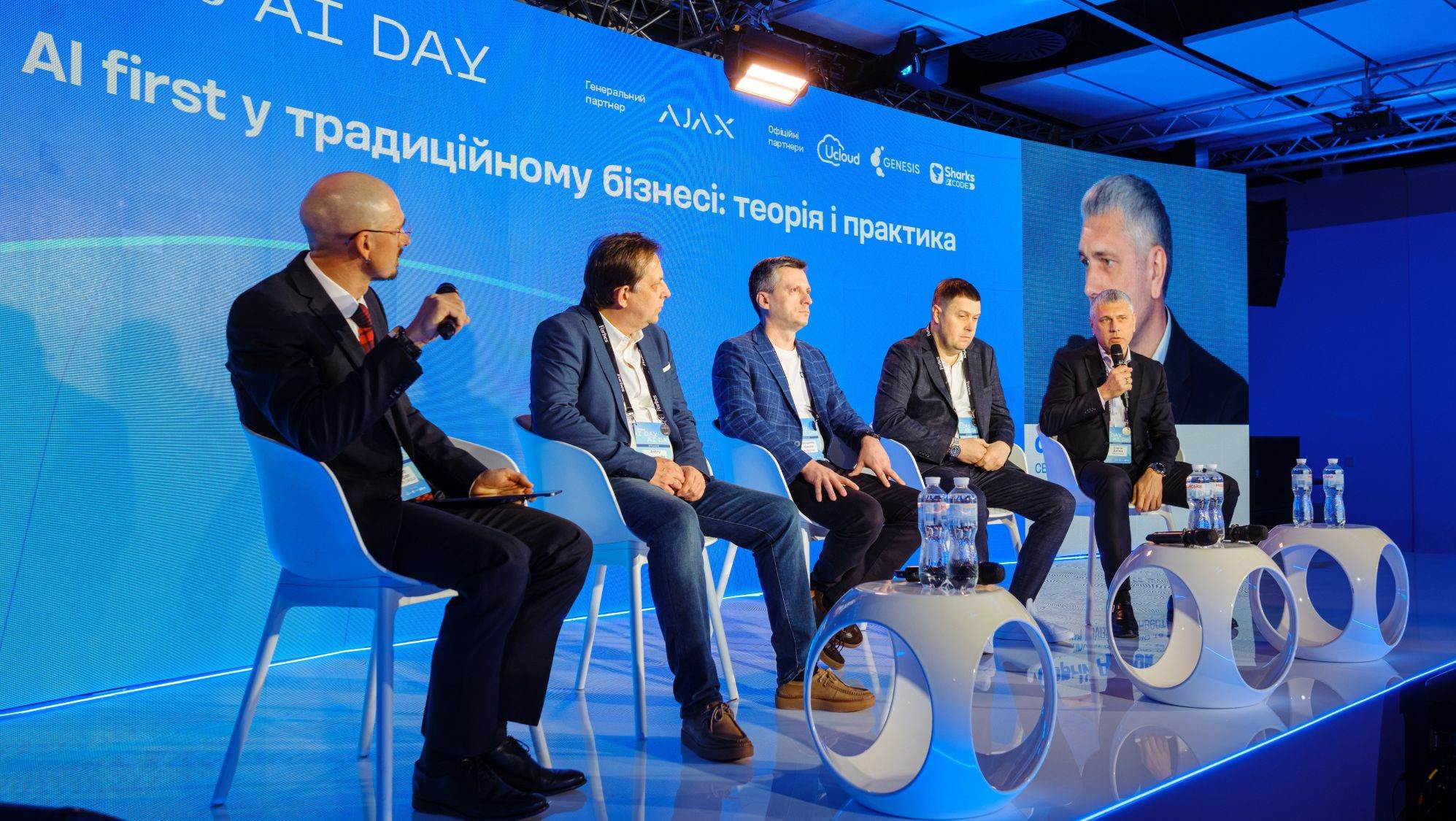
The event brought together around 30 speakers: entrepreneurs, technology leaders, government representatives, members of the academic community and investors. They discussed how AI is already transforming business models, reshaping approaches to company management and creating new opportunities for economic growth.
Serhii Detiuk took part in the panel discussion “AI-first in Traditional Business: Theory and Practice”. It also featured representatives of Naftogaz, MHP, Kormotech & Enzym Group, and Seeton.
According to the Metinvest Digital CEO, in the coming years, the greatest value from AI in industry will be captured by companies that can integrate it into management and business processes, even though it does not yet have a direct impact on physical production. Meanwhile, by working with data, knowledge and communications, large language models (LLMs) will help to optimise supporting processes and thereby improve overall business efficiency.
Big Tech versus the real sector
In the field of AI application, industrial companies differ from Big Tech by the availability of real-world data. It is precisely this data that underpins the development of many solutions. For example, Metinvest has implemented Slab Quality Control, a system for the automated detection of slab defects. Computer vision considers numerous parameters to ensure high-quality recognition.
Detiuk said: “The real sector possesses what Big Tech lacks: production data. It is this data that determines what AI will do and how: how it is trained, what steps it performs and what results it delivers. A model built on abstract data does not provide the key element: real feedback and practical value.”
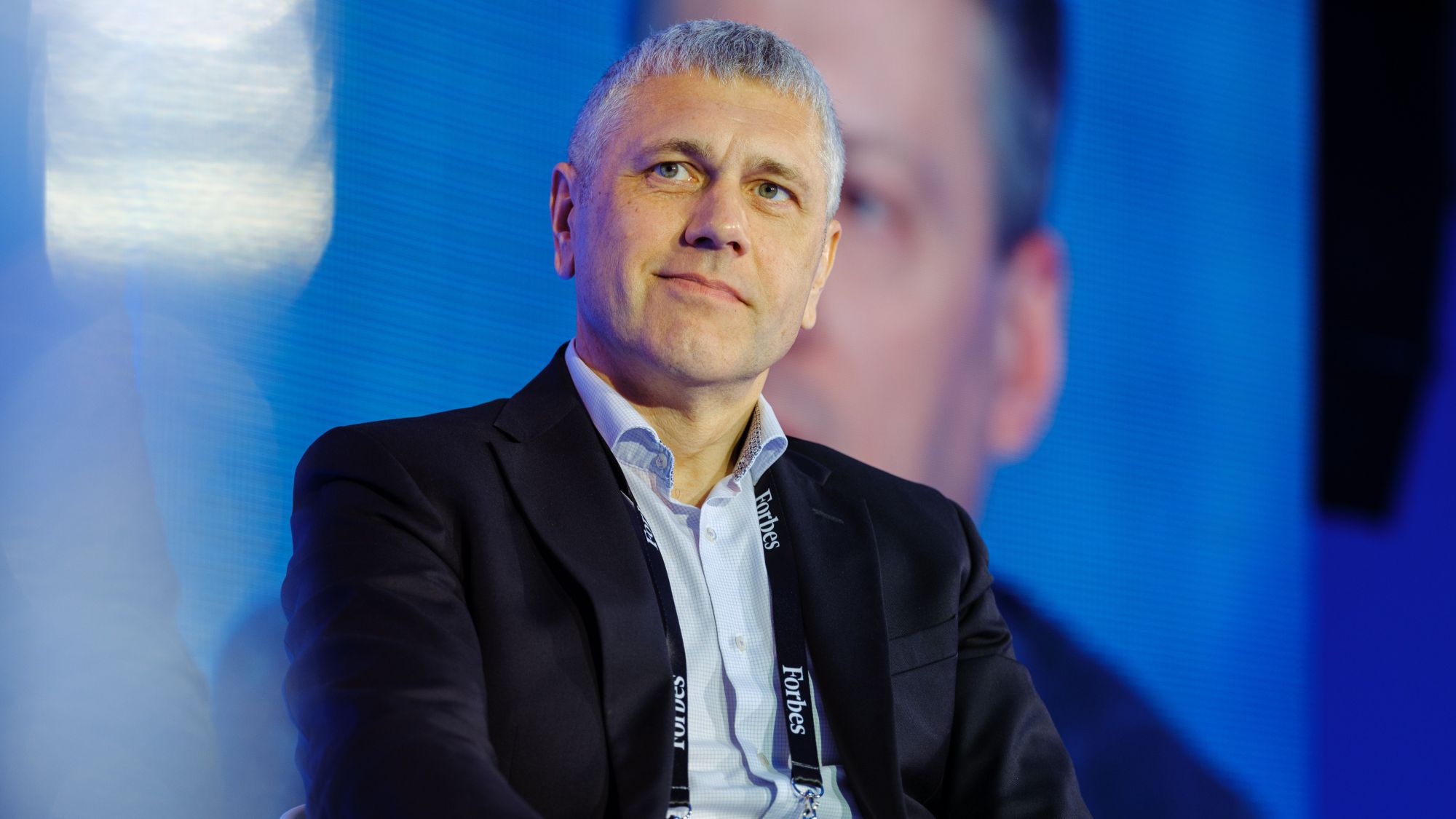
This is demonstrated by Metinvest Digital’s experience: solutions developed using real production data are in demand in the market. Businesses show strong interest in them, as independently going through such a cycle of development and training is time-consuming, complex and resource-intensive.
The Metinvest Digital CEO believes that traditional business cannot act solely as a supplier of data or infrastructure for Big Tech, as its core function is to produce and bring its own products to market. At the same time, certain IT companies that work with real-sector data – such as Metinvest Digital – can be of interest to technology players given their solutions and expertise.
Expectations for AI in industry
AI in traditional manufacturing often fails to deliver the expected results due to a combination of two factors: the complexity of the physical environment and managerial challenges. On one hand, harsh production conditions require lengthy and precise tuning of models to specific processes. On the other, even ready-made solutions require adaptation at the company level, as embedding AI-driven guidance into employees’ daily work entails changes to established instructions, processes and ways of working.
Detiuk added: “To achieve the expected results from AI, it is not only about the technology, but it also ultimately depends on us: how clearly we define tasks and whether we can refine them. Even the most advanced tool performs only as well as the precision with which we communicate what is required of it.”
Prerequisites for becoming AI-first in industry
For traditional businesses to become AI-first – where AI underpins decision-making and product development – cultural change is required foremost.
Detiuk said: “In my view, this technological revolution is comparable to mobile communications or the internet: it will become part of everyday life, work and business, and will fundamentally transform the way we interact. Exactly how and in what ways is difficult to predict, but these changes will certainly take place. At its core, this is a cultural revolution and a rethinking of how we engage with business. These processes may unfold gradually or be driven deliberately under our conscious management, and it is the latter path we should pursue.”
In his view, traditional businesses will succeed in the AI race if they are prepared not merely to experiment with technologies, but to embed AI systematically into their day-to-day operations.