
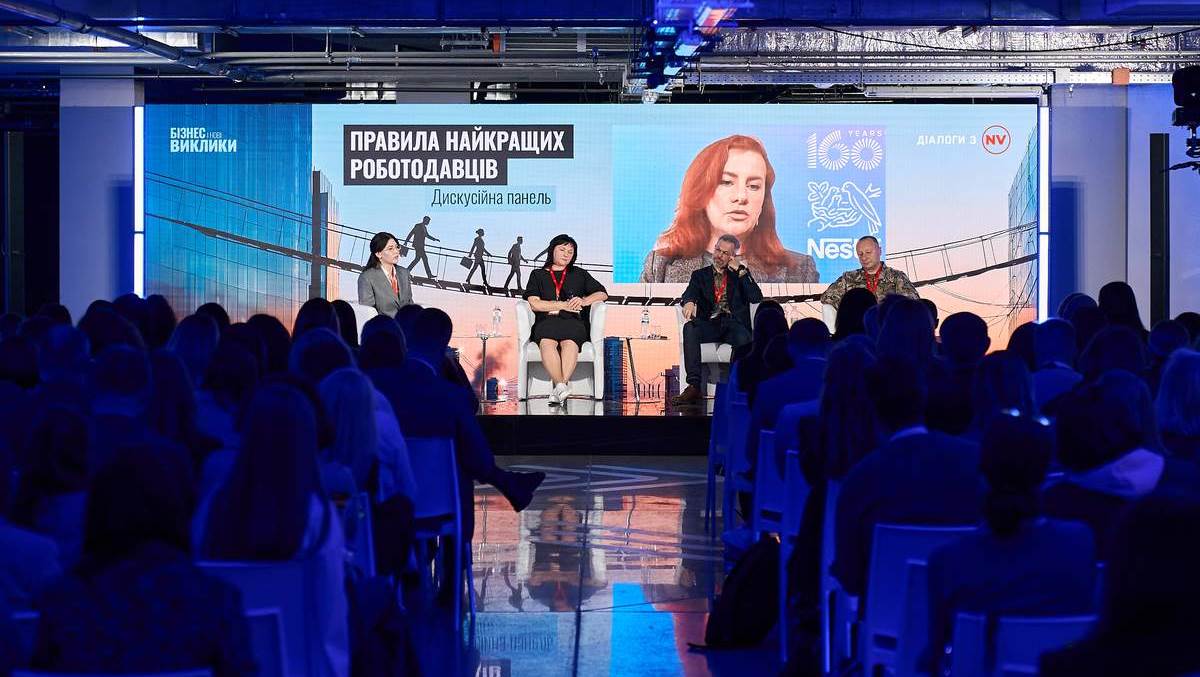
The event brought together government representatives, business leaders and experts. Participants discussed how businesses are adapting to the challenges of war, developing effective crisis management solutions and maintaining business continuity in changing circumstances, as well as how approaches to managing teams have evolved.
Davydenko took part in the panel discussion “The Principles of the Best Employers”, alongside representatives of Nestlé, Naftogaz Group and the Veteran Business Association.
Retaining the workforce
Metinvest’s head of corporate communications noted that the entire mining and metals industry is now being squeezed by three factors: Russian attacks, the blockade of Black Sea ports, which is curtailing exports, and EU trade restrictions.
Russian attacks have halted production at both of Metinvest’s steel plants in Ukraine. Two of its four mining and processing plants are idle, while the other two are operating at less than 50% of capacity.
Under these circumstances, making investments, securing financing and restoring production take second place. The Group’s main challenge is to retain its teams and preserve their expertise.
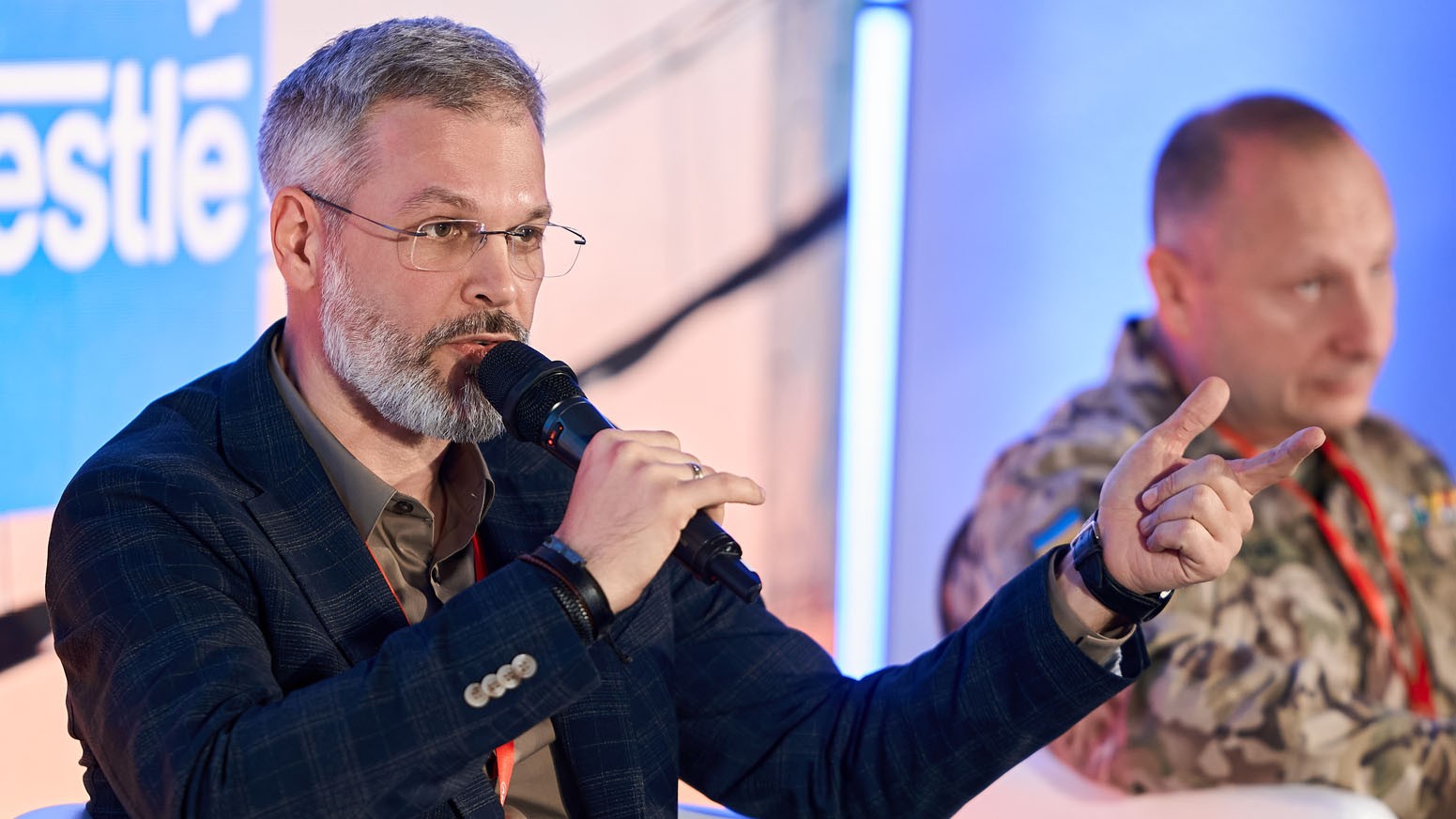
Davydenko commented: “Sooner or later, it will be possible to secure funding and restore equipment. Finding skilled professionals will be far more difficult. If we reach a point where we have buildings, equipment and money, but no people to resume production, it will be a catastrophe. That is why our main task today is to retain our people and their expertise. This is no longer simply about ensuring headcount, but about ensuring the resilience of our human capital.”
Even after production has stopped, Metinvest continues to pay salaries to keep its teams together. Employees who are unable to carry out their usual duties are assigned other work, including clearing rubble, assessing damage to equipment and preparing to restart production.
The Group’s head of corporate communications added: “Our main message is that we are not talking about introducing downtime or mothballing our operations. We are talking about restoring production. While we do not know when or how this will happen, we are already involving every employee in assessing the damage and planning the recovery. This is precisely what gives us full confidence that we will make it happen.”
The consequences of a halt in steel production
If companies lose their people, the impact will be felt across the economy. According to Davydenko, each job in the mining and metals sector creates a further eight jobs in related industries. As such, the suspension of operations threatens employment not only at such companies, but also across many other sectors of the economy. It risks increasing unemployment and labour migration, as well as the loss of skilled workers who will be difficult to bring back once the war ends.
Davydenko commented: “Metinvest employs nearly 40,000 people, with a further 8,500 employees serving in Ukraine’s defence forces. If we take the several hundred thousand people employed in the mining and metals sector and multiply that figure by eight jobs in related industries, how many people could be left without work? A million? And what then: migration and the loss of skills? Someone who leaves the country may never return. That is why it is better to make every effort now to keep people in Ukraine. We need to give them opportunities to retrain, gain new qualifications, transfer to another production site or work in a different sector.”
Supporting veterans
It is also important to support those returning from military service, who can strengthen teams. Davydenko believes that the onus should be not on veterans to adapt to civilian life, but on society to learn how to interact with former service personnel.
Metinvest has been supporting veterans since 2014. Following the start of the full-scale invasion, the Group formalised this experience through structured policies and programmes.
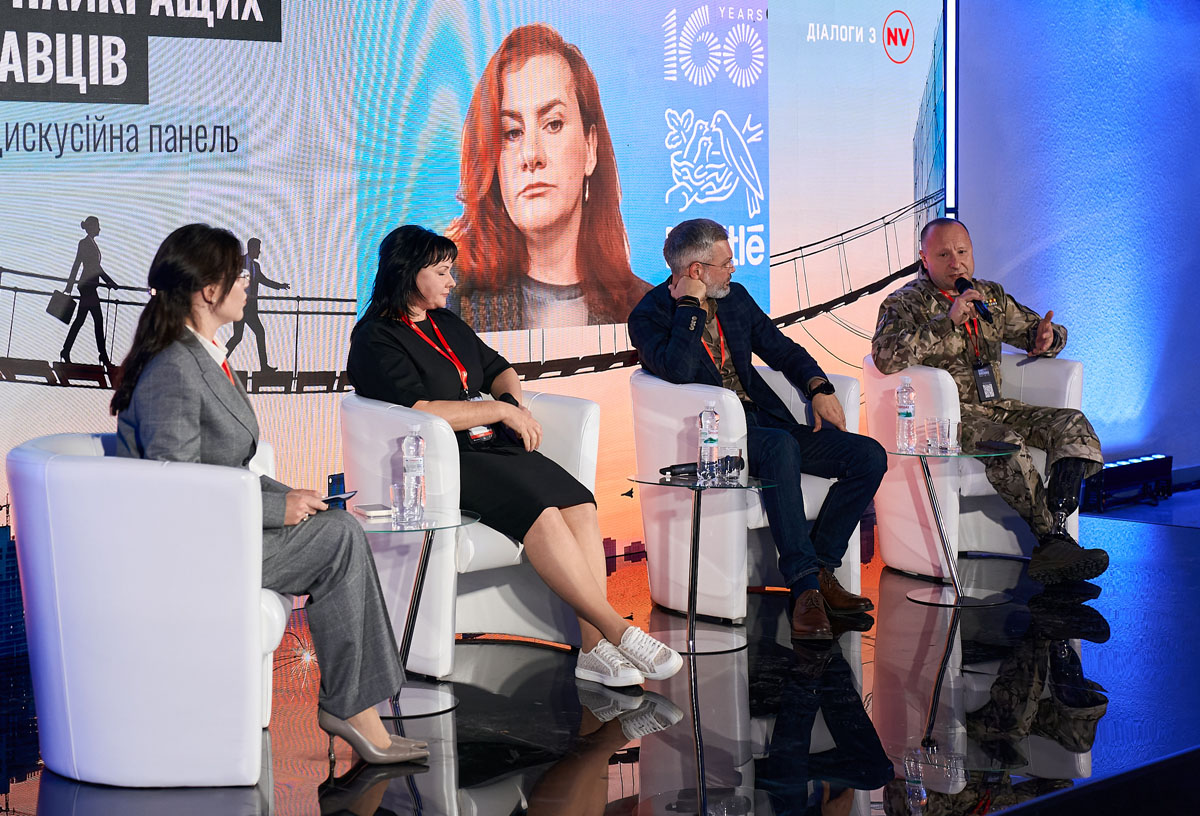
Metinvest’s head of corporate communications explained: “I was already saying two years ago that society needs to adapt, and that is what we must work towards. Veterans are part of our society and our team. They want to feel like everyone else in civilian life and do not need special treatment. That is why, when we developed our support programmes, we first asked veterans themselves what mattered to them and what they expected from their colleagues, managers and employer. We listened to their answers and built our veterans’ programme around them.”
Today, the veteran reintegration ecosystem covers the entire employee journey, from being mobilised to returning to work and settling back into the team. Metinvest maintains regular contact with service personnel and their families, and prepares managers and teams to work with veterans through its “Heroes Among Us” programme.
The Group is also developing initiatives for veterans’ communities in the cities where it operates. These include “Space for Veterans” hubs and the “Speak Up, Veteran” programme, which brings former service personnel together for regular meetings with experts to discuss issues that they face.
Davydenko said: “I am very sorry to hear that many companies still have no policies for supporting veterans. There are established approaches and standards they can use. There is no need to be afraid of this: we need to start talking to people, listening to them and taking action.”
The guiding principle for the best employers
An employer’s responsibility extends beyond helping veterans to return to work. Today, the best employers are those who think about the future and Ukraine’s recovery.
Metinvest’s head of corporate communications noted: “The fundamental rule is to invest. And the first line of any investment project must read: people and their skills. That is why we need to invest in education and retaining skilled professionals. We cannot afford to import human capital and knowledge: they must remain in Ukraine.”
Davydenko added that the Metinvest Polytechnic technical university admitted its first cohort of students in 2022, at the start of the full-scale invasion. The university continues to operate today, training the specialists who will be needed for Ukraine’s recovery.