
The forum brought together chief financial officers, business owners and representatives from banks, investment funds, technology companies and government institutions. Participants discussed the main challenges facing Ukrainian businesses during the war, as well as financial planning, attracting investment, digitalisation and adapting to changes in the economic and regulatory environment.
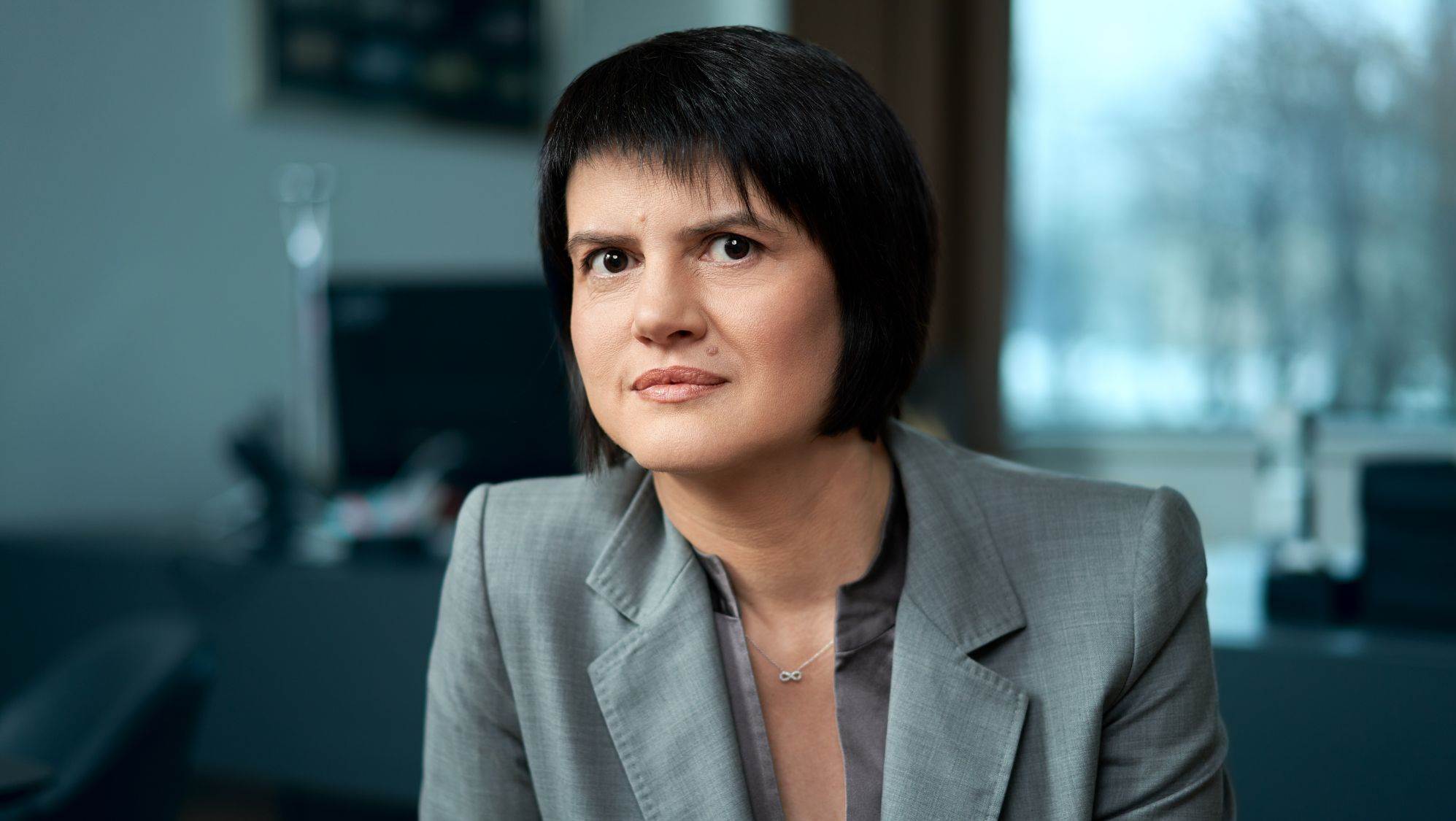
Dankova took part in a panel discussion entitled “Adaptive planning & operating model: how companies are reshaping planning and decision making amid constant uncertainty”. Other panellists included chief financial officers from British American Tobacco, Danone and Foxtrot. The discussion was moderated by Mykhailo Kolisnyk, Professor of Finance at the Kyiv School of Economics.
How planning has changed
Despite the uncertainty, Metinvest continues to draw up an annual business plan each autumn for the following year. What has changed is the planning process itself, which now takes account of a core operating scenario, potential risks and contingency measures for unforeseen events.
“We choose the scenario we have most confidence in and are prepared to stand behind. We then build in contingencies: identifying what else we could do, even if the scenario is based on quite ambitious assumptions. Next, we identify the risks and track which contingency measures we have used, which risks have materialised and how many ‘black swan’ events have occurred: in other words, things we did not foresee,” Dankova explained.
The factors informing the Group’s plans have changed too. Instead of trying to predict when the war will end, Metinvest focuses on specific operating conditions: when Black Sea ports might reopen, how much freight the rail network can carry and whether its plants are able to operate.
“Today, businesses need to be ready to revise their plans continually. But the planning process itself helps teams understand their objectives, assess different scenarios and make the best decisions in economic and management terms. For large corporations, at least, this is essential. The key is to understand quickly how a change in one factor affects the business as a whole. That is what helps companies withstand today’s challenges,” Dankova commented.
Short planning cycles
While the annual plan sets the overall direction, Metinvest plans its day-to-day operations four months ahead. Each month, the Group assesses the market and its production capacity, calculates margins, aligns production plans, and then prepares cash flows and budgets. Yet the situation can change dramatically even over this relatively short period.
“Between these planning sub-cycles, we typically face several attacks, Black Sea port closures, the introduction of EU quotas on steel imports and changes to nationwide programmes,” Dankova noted.
This means that Metinvest must be able to adapt its operations quickly. When logistics are disrupted, shipments need to be rerouted from Black Sea ports to Poland and Romania. If raw material supplies are affected, the Group must find alternative sources and recalculate the economics of production.
“Unfortunately, there was another attack on 17 October. The plants are not operating. At the same time, we are already planning the next four-month cycle, which will extend two months into next year, and preparing the decisions required under our chosen scenario,” she added.
Triggers for revising plans
Metinvest revisits its operating scenarios whenever a significant event occurs that could affect its operations. Examples include a blockade of Black Sea ports or changes to the conditions for exporting to the EU arising from the Carbon Border Adjustment Mechanism (CBAM).
“Last year, we approved our business plan in December, but by early January we had learned that Ukraine had not been granted an exemption from CBAM. As this affected our business plan, we immediately revised our operating scenarios,” Dankova explained.
Metinvest uses dedicated platforms for its calculations: one for sales and production planning, and another to consolidate cost data from its plants. Excel remains part of the process too.
The art of management
How decisions are made depends on the circumstances and the scale of the problem. Some matters can be resolved locally, while others call for a centralised approach. For example, when raw materials must be allocated across several plants, the Group needs to determine where they can be put to best use.
“Decisions need to be made quickly, either locally or centrally, depending on the circumstances and their likely impact. That is where the art of management lies today,” Dankova stated.
Regularly adjusting plans and decisions has become an integral part of Metinvest’s operating model. Previously, key figures for sales, production and margins were fixed during the planning process; now they are reviewed at budget committee meetings and weekly operational meetings.
“This is adaptive management, which we turn to in a crisis. And we have been operating under such conditions since 2014,” she added.
This approach depends on the rapid exchange of information and close cooperation between departments, because the quality of decisions rests on how well teams understand one another’s needs.
“It is important to ask colleagues what you can do for them and to understand what they can do for you. Managing working capital requires cooperation with the commercial director, while managing inventories and procurement requires working closely with the operations director. This kind of collaboration should be standard practice,” Dankova commented.